Straight To The Point
-
The rules of advocacy in Washington have changed faster than most organizations’ strategies have.
-
The gap between how influence actually works in Washington and how many organizations still operate is now costing companies time, money, and access.
-
Organizations that update their advocacy playbook now will shape outcomes; those that don’t will spend more and achieve less.
What We See
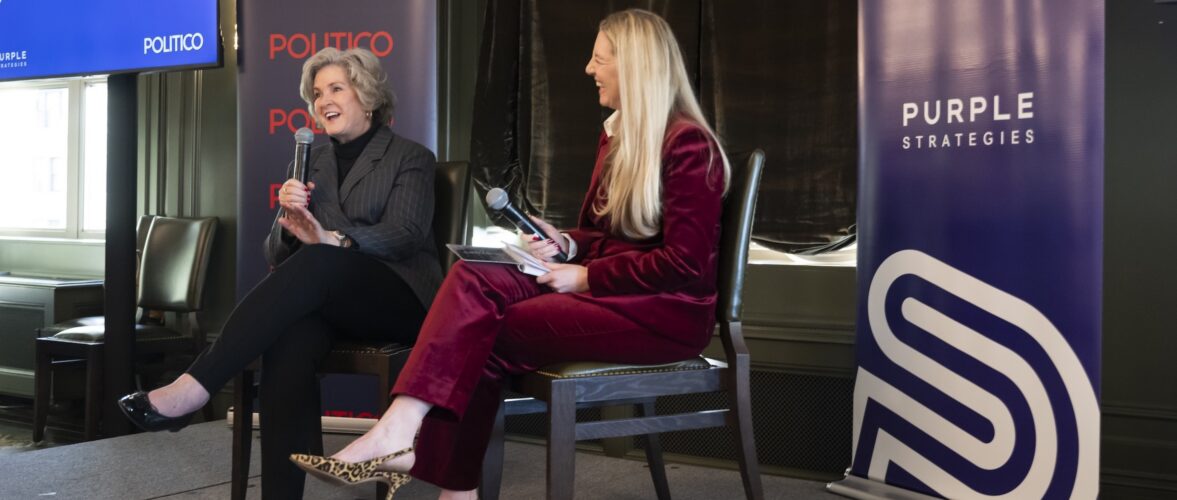
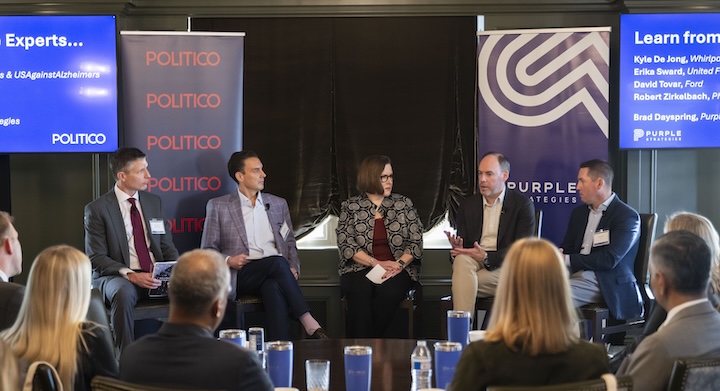
At the end of last year, Purple Strategies convened corporate and association leaders alongside POLITICO for a candid conversation just steps from the White House — including a discussion with Susie Wiles, White House Chief of Staff to talk about a simple but urgent question:
How do you actually succeed in Washington right now?
The answer, made clear throughout the morning, is that Washington is operating on a fundamentally different advocacy operating system.
Power has centralized. Decision-making has accelerated. Traditional venues for bipartisan compromise have narrowed. And influence now flows through a wider and less predictable constellation of actors, many of them outside formal government channels.
In other words: the old Beltway playbook still matters but it is no longer sufficient.
We’ve captured the key insights from the evening — including perspectives from corporate, association, and advocacy leaders — in a post-event recap developed with POLITICO.
What It Means
The discussion reinforced what we are seeing across clients and sectors: advocacy is simultaneously more important, more scrutinized, and less forgiving of missteps than ever before.
A few realities stood out:
- The White House is the dominant center of gravity. Nearly every major policy decision ultimately runs through the administration, even those once left to agencies or Congress.
- Coalitions and associations are operating at peak power — and peak pressure. They are better funded, more aggressive, and more visible, but also at greater risk if governance and strategy are unclear.
- Agility is no longer optional. Velocity has increased dramatically. Influence now depends on speed, precision, and an ability to pivot as decisions move through unconventional pathways.
- Congress still matters — even when it isn’t moving. Lawmakers shape narratives, provide oversight, and often serve as critical channels into the administration, even in a stagnant legislative environment.
Perhaps most importantly, there was broad agreement on one point: You cannot win in today’s Washington by simply doubling down on the tactics that worked five or even two years ago.

What to Do
Winning in this environment requires a reset, not a retreat. Based on theinsights shared at the event and the joint Purple–POLITICO research, a few imperatives are clear:
Design coalitions for impact, not optics. Coalitions must be purpose-built, fast-moving, and able to say things individual members cannot say alone.
Rebuild your theory of influence around real decision pathways. Start with power mapping, not tactics and work backward from who actually shapes outcomes.
Treat speed and patience as complementary, not contradictory.Broad-based pressure campaigns often backfire; disciplined, targeted, well-timed engagement increasingly wins.
Translate advocacy value in terms leadership understands. Progress is not just policy wins, it is access, risk mitigation, and building enterprise value ahead of major decision points.
Advocacy has never mattered more and it has never required more precision.
We encourage you to take a look to see how senior practitioners are rethinking influence, coalitions, and engagement in Washington’s NewNormal. Click Here for the Purple Strategies & POLITICO Roadmap: Advocacy in Washington’s New Normal.
If you’re still running the old playbook, now is the moment to update it — before the next wave of hearings, rulemakings, or election cycles forces the issue.
 Your Earnings Call Just Testified Before Congress. Were You ...
  How can you hit the bullseye during the big game without bec...
  Patients Aren’t Patient Anymore